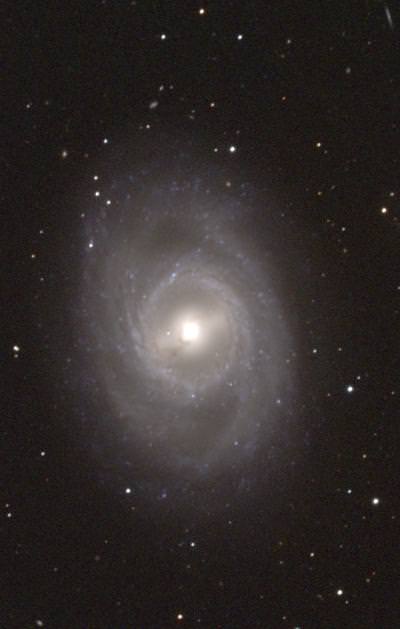
 Greetings, fellow SkyWatchers! It's shaping up to be a great week to enjoy astronomy. For both hemispheres, the Virginid Meteor shower is underway and its peak occurs late Monday night / early Tuesday morning. Need more celestial fireworks? Then keep looking up as the "April Fireballs" will be visiting, with their peak beginning about a week from today and lasting for 24 days. Even if you only catch one of these bright travelers as they sparkle across the starry sky, it will make your night! But hang on, there will be plenty to explore. Bright stars and bright planets are featured - as well as some of the season's best galaxies. Keep your telescope out and don't get spooked, because the "Ghost of Jupiter" will be a challenge object! If you want to know more about astonomy history, and what you can see with just your eyes and your optics, then meet me in the back yard...
Saturday, April 7, 2012
Weekly SkyWatcher's Forecast: April 9-15, 2012
Greetings, fellow SkyWatchers! It's shaping up to be a great week to enjoy astronomy. For both hemispheres, the Virginid Meteor shower is underway and its peak occurs late Monday night / early Tuesday morning. Need more celestial fireworks? Then keep looking up as the "April Fireballs" will be visiting, with their peak beginning about a week from today and lasting for 24 days. Even if you only catch one of these bright travelers as they sparkle across the starry sky, it will make your night! But hang on, there will be plenty to explore. Bright stars and bright planets are featured - as well as some of the season's best galaxies. Keep your telescope out and don't get spooked, because the "Ghost of Jupiter" will be a challenge object! If you want to know more about astonomy history, and what you can see with just your eyes and your optics, then meet me in the back yard...


Thursday, April 5, 2012
Titanium Testing Reveals Moon Is Earth’s Baby

Even though it has been some four decades since the Apollo mission returned to Earth with their precious cargo of lunar soil and rock samples, these old samples are still teaching us new things. According to a recent study of Moon matter, the chemical signature blows away the common theory that the Moon was a product of a collision. According to the giant impactor scenario, the Moon may have formed when Earth and a hypothetical Mars-sized body referred to as “Theia” collided some 4.5 billion years ago. However, graduate student, Junjun Zhang of the University of Chicago, may prove otherwise. By analyzing the titanium content of lunar samples, Earth and meteorites, she speculates the Moon’s composition comes solely from Earth.
Sunday, April 1, 2012
Weekly SkyWatcher's Forecast: April 2-8, 2012
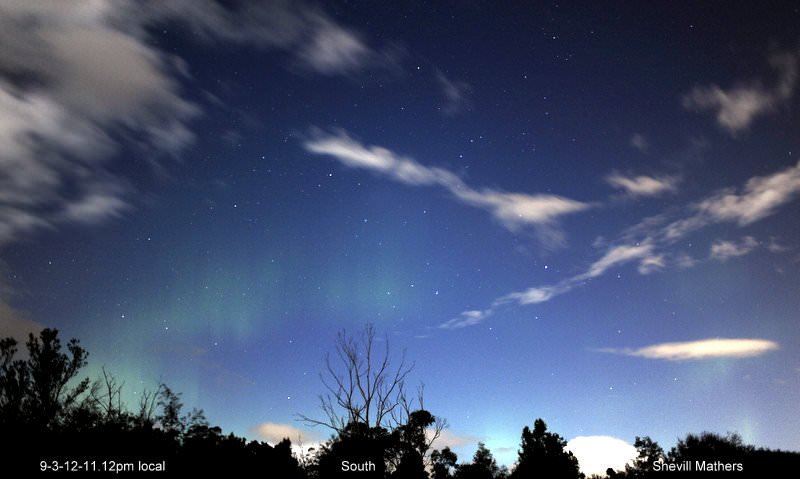
Greetings, fellow SkyWatchers! Despite the Moon, it will be a great week as the month of April opens with two meteor showers. The planetary action doesn't stop, because Venus is about to become a "guest star" in the Pleiades! Need more? Then know it's the right time of year to spot aurora - and to gather photons from bright star clusters! Get out your binoculars and telescopes and meet me in the back yard...
Thursday, March 29, 2012
San Diego Science Festival - 3/24/12 - PETCO Park
By Craig Weatherwax
The day broke cloudy and gray, an inauspicious beginning to a day when OPT wanted to share viewing the sun with the 27,000 people who would attend the 4th annual San Diego Festival of Science and Engineering held at PetCo Park. We were already committed to the event so we hitched up our pants and soldiered on!
The Booth:
Penny and her “ah” team…Tanya, Rayna, Theresa, and Diana did a fantastic job of decorating the “double wide” booth and “womaning” the booth all day. We had solar beads and do it yourself sun dials (as you can tell, solar was the theme for OPT), to give away to the attendees of the festival. They helped make and gave away over 1300 solar bead bracelets….(I’m sure they must have had dreams/nightmares of them that night) and a like number of sun dials, to the delight of the crowd. They were tireless in their enthusiasm for the event. I can’t thank them enough.
The Solar Observing:
Captains Doug McFarland and Paul Cooper and their motley crew Ralph, Rod and myself, set up the solar scopes in hopes the sky would cooperate. We had a Coronado PST and a Lunt double stack 60 dedicated solar scopes on a iOptron Mini tower Pro, a Celestron 102mm with a 1000 Oaks white light filter and an Orion 80mm Refractor with a Coronado 40mm h-alpha filter on an Orion Atlas mount, and an 80mm Orion refractor with a 1000 Oaks white light filter and another Orion 80mm scope with a Coronado 40mm h-alpha filter on a Meade LXD55 mount. All the mounts were computer robotic and worked flawlessly all day, except when kids failed to heed our advice of “please don’t touch the telescope, just look through it”. Fortunately this didn’t happen too often.
Well, the sky cleared up enough to give us a view of the sun, but initially there was too much cloud cover to see any prominences. We were treated to a fairly rare solar event, at least in San Diego, a solar halo It was very cool!

Things were going great until the sun got eclipsed by one of the high-rises downtown about 2PM. Undaunted, we grabbed the scopes and mounts and hiked up to the top of a hill at the “park at the park “ at PETCO Park. Set them up again, and 20 minutes later we were viewing again. We were rewarded for our move by the sky clearing and the ability to see some solar activity…sun spots through the white light filters and solar prominences through the H-Alpha scopes….it was very exciting and quite the crowd pleaser! With the 6 scopes and the 5 guys manning them, I figure we were able to accommodate 10 people per minute, so in the almost 7 hours of viewing we were able to share our closest star with over 4000 people!
When 5PM finally arrived 10 very exhausted OPT employees broke down the booth and hand carried all the booth paraphernalia and solar observing equipment to the waiting vans.
Was it worth it? You bet!
Check out more photos from the event on our Facebook page.
Monday, March 26, 2012
Product Review: The TeleVue Plossl – Unsung Eyepiece Hero
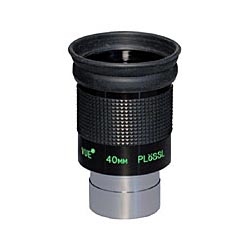 If you're into telescopy, then you know the name Televue needs little or no introduction at all. The name is absolutely synonymous with the most outstanding quality and high performance optics in the business and every product is backed by uncompromising standards. Of course, if you're like me, the moment I see the name Televue little dollar signs start swimming around in front of my eyes. Would you like me to shoo them away for you?
Saturday, March 24, 2012
Weekly SkyWatcher's Forecast - March 26 to April 1, 2012
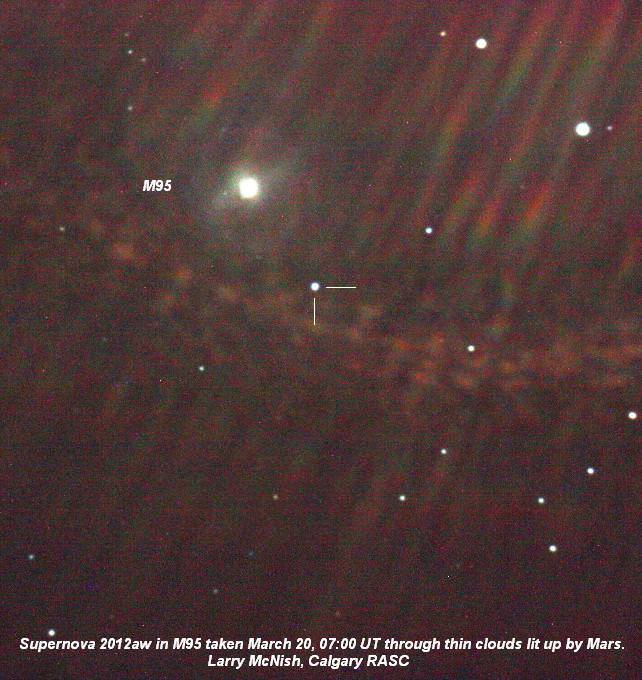
Greetings, fellow SkyWatchers! Have you been following the supernova in M95? Who would have ever believed Mars could be considered "light pollution"? Take advantage of darker skies and catch it now! It's another planetary showdown as the week begins with Jupiter, Venus, the Moon and the Pleiades lighting up the western twilight sky. Right now is an awesome time to study lunar features and to go asteroid hunting! Get out those telescopes and binoculars and I'll meet you in the back yard...
Wednesday, March 21, 2012
Speca – An Intriguing Look Into The Beginning Of A Black Hole Jet
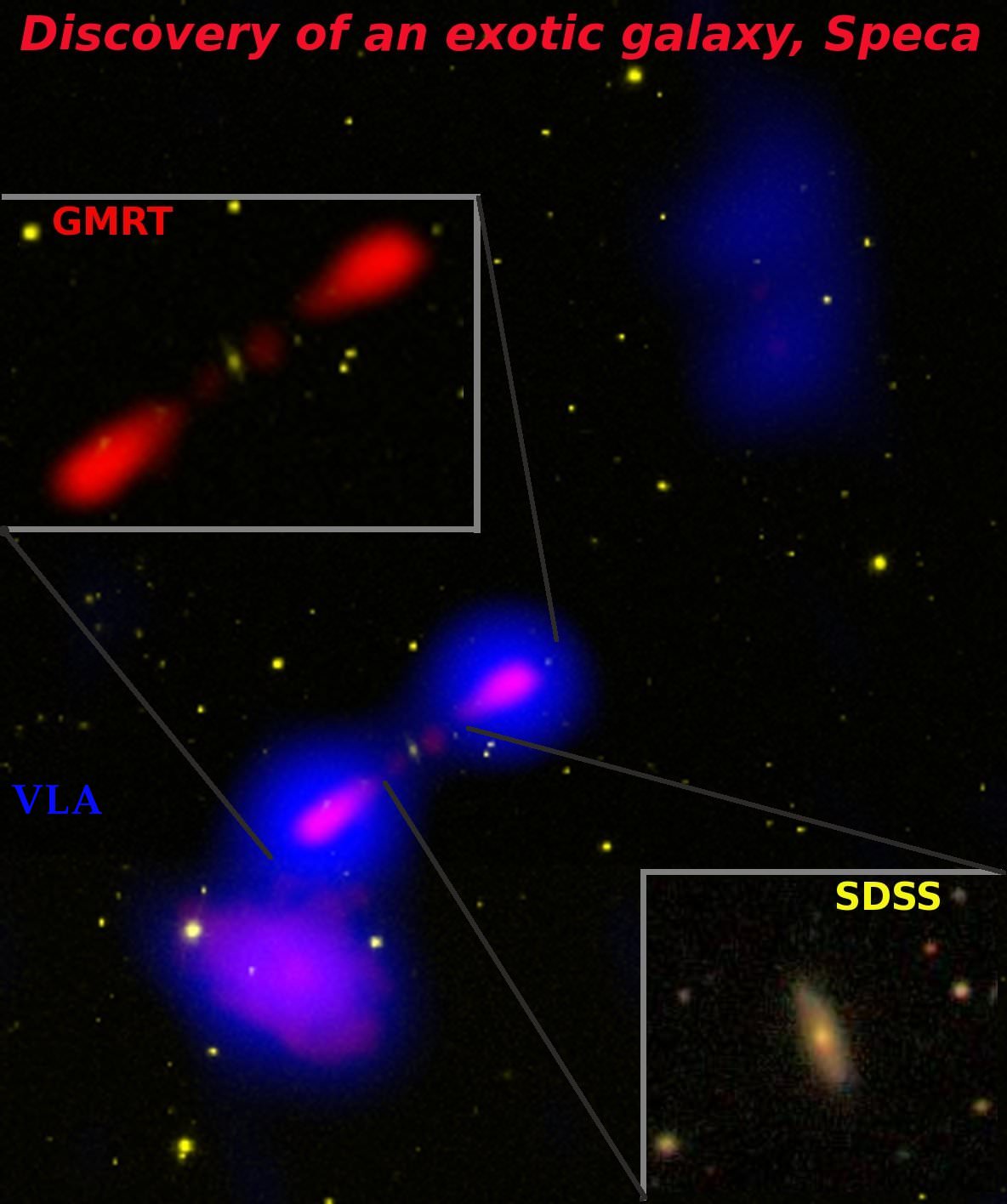
A unique galaxy, which holds clues to the evolution of galaxies billions of years ago, has now been discovered by an Indian-led international team of astronomers. The discovery, which will enable scientists to unearth new aspects about the formation of galaxies in the early universe, has been made using the Giant Meterwave Radio Telescope (GMRT) of the National Centre for Radio Astrophysics, Tata Institute of Fundamental Research (NCRA-TIFR). CREDIT: Hota et al., SDSS, NCRA-TIFR, NRAO/AUI/NSF
Its catalog number is NGC 3801, but its name is SPECA - a Spiral-host Episodic radio galaxy tracing Cluster Accretion. That's certainly a mouthful of words for this unusual galaxy, but there's a lot more going on here than just its name. “This is probably the most exotic galaxy with a black hole, ever seen. It has the potential to teach us new lessons about how galaxies and clusters of galaxies formed in the early Universe,” said Ananda Hota, of the Academia Sinica Institute of Astronomy and Astrophysics (ASIAA), in Taiwan and who discovered this exotic galaxy. "We find this merger-remnant early-type galaxy to have an intriguing spiral-wisp of young star forming regions."
Subscribe to:
Posts (Atom)